
PROVEN EXPERIENCE.
MISSION-READY SOLUTIONS.
Explore Vertex Solutions past performance across defense, commercial, and international programs, from immersive training systems to engineering and sustainment solutions.
explore our experience
ONE PAGE. THREE MARKETS. PROVEN RESULTS.
From advanced training systems to full lifecycle support, Vertex Solutions delivers solutions across defense, commercial, and international markets.
defense experience
PROVEN ACROSS THE JOINT TRAINING ECOSYSTEM.
Vertex Solutions delivers advanced training systems, engineering support, and mission-critical solutions for U.S. and allied defense programs.
USAF • DIU
Pilot Training Transformation
USAF • DIU
Multi-Place Mixed Reality (MPMR)
USAF • DIU
VTRAD - FBF - T-38C Mixed reality
USAF • DIU
vtrad - fbf - f-16 mixed reality
us navy
T-6B Virtual Reality ITDs
us navy
Project Corsair - T-45C VIRTUAL REALITY ITDs
AFSOC
AC-130J Virtual Reality Combat Mission Trainer
AFSOC
AC-130J Virtual Reality Part-Task Trainer
AFSOC
AC-130J VIRTUAL REALITY FUEL CELL MAINTENANCE TRAINER
CD&I
MILITARY FREE-FALL JUMPMASTER VIRTUAL TRAINING SYSTEM
U.S. NAVY EOD
MK 16 UNDERWATER BREATHING APPARATUS SIMULATOR
U.S. ARMY
CH-47 MAINTENANCE-INSTRUCTOR TRAINING MODELS
Pilot Training Transformation (PTT) - USAF / DIU DIU
PROGRAM OVERVIEW
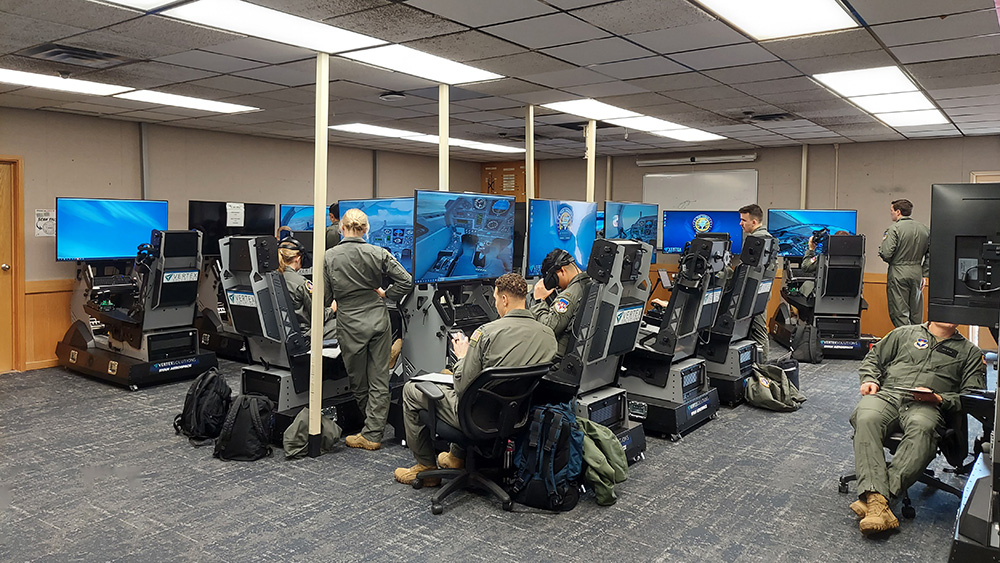
Vertex Solutions was selected as a prime contractor and systems integrator for the U.S. Air Force's Pilot Training Transformation (PTT) program, an initiative led by the Defense Innovation Unit (DIU) to modernize undergraduate pilot training. Building on Pilot Training Next (PTN), the program integrates immersive training devices, advanced simulation software, instructor tools, and supporting network infrastructure into a scalable XR training ecosystem. Vertex has delivered hundreds of immersive training devices supporting multiple aircraft platforms, helping transform how military pilots learn, practice, and build proficiency.
THE CHALLENGE
BREAKING TRAINING BOTTLENECKS
Traditional pilot training relies heavily on expensive aircraft, limited simulator availability, and instructor-intensive training schedules. As the Air Force works to meet pilot production demands, it needs a more scalable, affordable approach that gives students greater opportunities to practice, build proficiency, and prepare for flight without increasing demands on operational aircraft and training resources.
VERTEX SOLUTION
THE FIRST VIRTUAL REALITY FLIGHT TRAINING DEVICE SCALED FOR THE US MILITARY.
As prime systems integrator, Vertex brought together commercial simulation technologies, reconfigurable XR hardware, advanced flight models, instructor operator stations, and network infrastructure to create a cohesive training ecosystem. Integrated into the USAF's undergraduate pilot training curriculum, these solutions enable students to practice procedures, maneuvers, and flight scenarios more frequently, while providing instructors with flexible tools to support individualized, proficiency-based training.
RESULTS & IMPACT
MEASURABLE TRAINING TRANSFORMATION.
Pilot Training Transformation has demonstrated the value of immersive simulation in improving training accessibility, efficiency, and student performance. Program-reported outcomes include a 30% reduction in time to solo, 40% fewer additional training events, 20% improvement in checkride performance, and 15% greater learning transfer.
Further validating the approach, a three-year analysis coauthored by Vertex Solutions and the U.S. Air Force demonstrated a strong correlation between VR training and improved student performance during initial aircraft flights. The research earned Best Paper in Simulation at I/ITSEC 2024, reinforcing the value of immersive training as a scalable alternative to traditional simulation approaches.
PERFORMANCE HIGHLIGHTS
30%
Decrease in Time to Solo
40%
Decrease in Additional Training Events
20%
Increase in Checkride Performance
15%
Increase in Learning Transfer
Research-backed innovation. Proven in military pilot training.
Multi-Place Mixed Reality (MPMR) - USAF / DIU
PROGRAM OVERVIEW
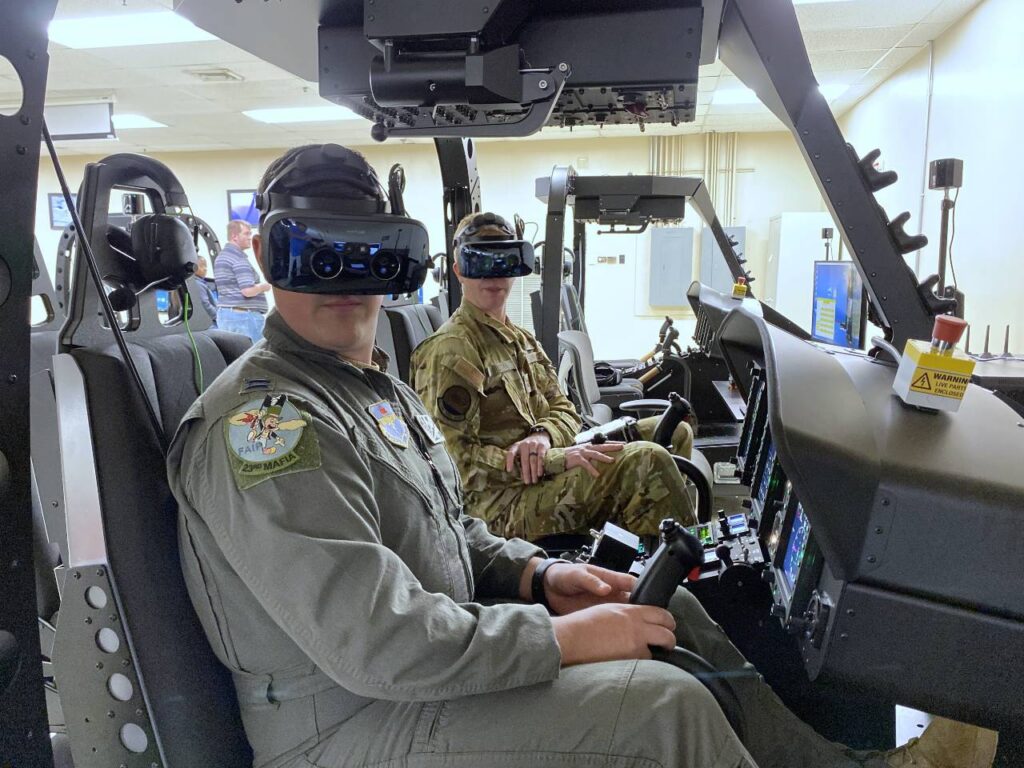
Vertex Solutions was selected by the Defense Innovation Unit (DIU) to develop a reconfigurable Multi-Place Mixed Reality (MPMR) Flight Simulator for the U.S. Air Force's 19th Air Force and Air Education and Training Command (AETC). Initially designed for the TH-1H helicopter under the Helicopter Training Next initiative, the program advances a more affordable, scalable alternative to traditional Weapon Systems Trainers (WSTs). Building on technology developed through Pilot Training Transformation (PTT), Vertex integrates realistic cockpit hardware, high-fidelity flight simulation, mixed reality visuals, and open software architecture into a multi-crew training system adaptable to fixed-wing and rotary-wing aircraft.
THE CHALLENGE
FULL-MISSION CAPABILITY. WITHOUT THE TRADITIONAL COST.
Traditional military flight simulators, including Weapon Systems Trainers and Operational Flight Trainers, are expensive to acquire, operate, upgrade, and maintain. Their large footprints and specialized infrastructure limit training accessibility, while aging technology makes modernization costly and complex. The Air Force needed a more flexible, affordable helicopter training solution capable of supporting basic through advanced flight instruction, emergency procedures, and crew coordination without sacrificing the realism required for effective pilot training.
VERTEX SOLUTION
HIGH-FIDELITY SIMULATION. RECONFIGURABLE BY DESIGN.
Vertex developed a modular mixed reality flight simulator combining physical cockpit controls, force-feedback systems, accurate avionics modeling, and high-fidelity flight dynamics within an immersive training environment. The TH-1H configuration supports single- and multi-crew instruction, emergency procedures, Crew Resource Management (CRM), instrument training, and night vision goggle (NVG) operations. Leveraging existing PTT hardware, software, and Vertex's Digital Backbone, the system integrates commercial and simulator-grade technologies through an open architecture. Its compact footprint and reconfigurable design support future aircraft adaptations, simplified modernization, and integration with existing military training ecosystems.
RESULTS & IMPACT
ADVANCED SIMULATION. A FRACTION OF THE INFRASTRUCTURE.
The MPMR program established a modular approach to high-fidelity, multi-crew mixed reality flight simulation, extending Vertex's proven undergraduate pilot training technology toward more advanced helicopter training applications. Designed to reduce acquisition, facility, and lifecycle costs compared with traditional Weapon Systems Trainers, the platform provides a pathway to greater training accessibility without the infrastructure demands of legacy simulators. Its shared architecture, including approximately 80% hardware commonality with existing Vertex training systems, supports efficient upgrades, reduced sustainment complexity, and future fixed-wing and rotary-wing configurations. The program demonstrates how Vertex combines immersive technology, flight simulation, and systems integration to address complex military aviation training requirements while creating opportunities for future commercial aviation applications.
PERFORMANCE HIGHLIGHTS
Multi-Crew
Flight Training
DIU
OTA Success Memo
Multi-Platform
Reconfigurability
Open
Architecture
T-38C Virtual Training for Air Dominance / Fighter Bomber Fundamentals (VTRAD / FBF) - USAF / DIU
PROGRAM OVERVIEW
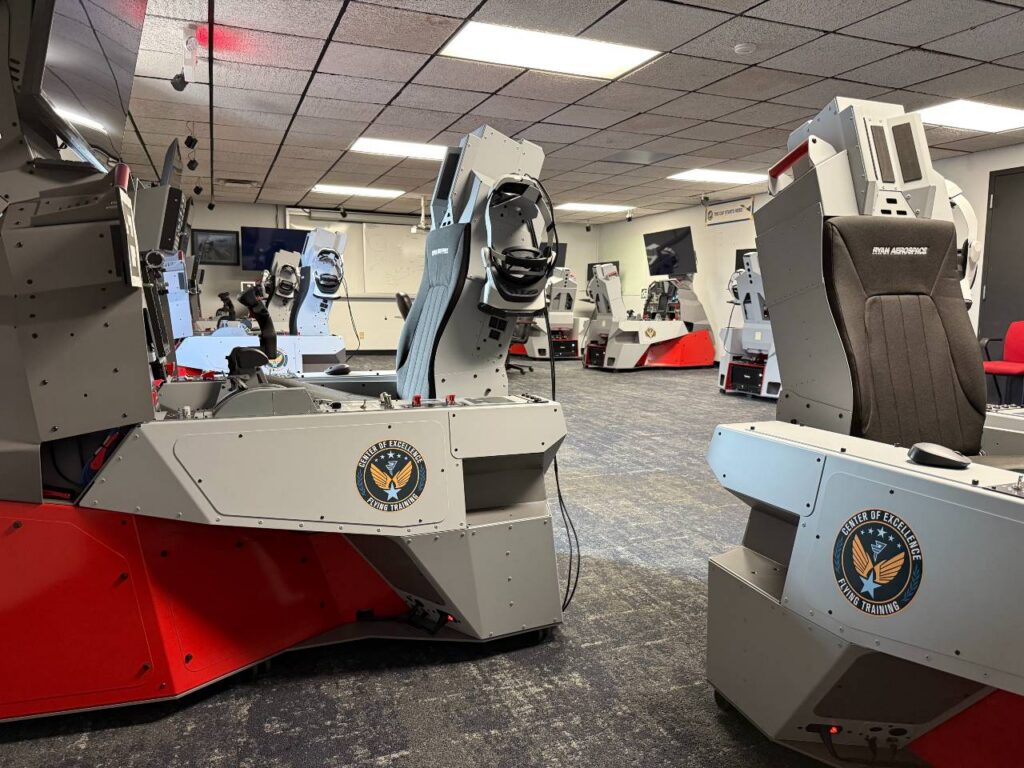
Vertex Solutions was selected by the Defense Innovation Unit (DIU) to develop next-generation T-38C Mixed Reality Flight Training Devices supporting the U.S. Air Force's Virtual Training for Air Dominance (VTRAD) program and Fighter/Bomber Fundamentals (FBF) tactical jet training course. Building on immersive training devices developed through Pilot Training Transformation (PTT), Vertex integrated physical avionics, advanced aircraft modeling, and mixed reality technology into a reconfigurable training platform. Following successful prototype acceptance, Vertex received a follow-on award in 2025 for 25 additional T-38 Gen 2 enhanced Immersive Training Devices (eITDs), expanding the program from prototype development toward production-scale deployment.
THE CHALLENGE
MODERNIZING THE PATH TO FIGHTER READINESS.
Preparing the next generation of fighter and bomber pilots requires increasingly sophisticated training that reflects the complexity of modern combat aviation. Traditional training relies heavily on expensive aircraft and large, fixed-configuration simulators with limited accessibility, networking, and adaptability. The Air Force needed a scalable, cost-effective solution that could bridge the gap between undergraduate pilot training and advanced tactical aviation while providing greater opportunities to practice aircraft procedures, develop proficiency, and prepare for complex mission scenarios.
VERTEX SOLUTION
HIGH-FIDELITY TRAINING. BUILT ON PROVEN TECHNOLOGY.
Vertex transformed its proven XR training architecture into a high-fidelity T-38C mixed reality simulator featuring integrated physical avionics, interactive cockpit controls, force feedback, and advanced aircraft performance modeling. The system supports cockpit familiarization, emergency procedures, instrument training, mission rehearsal, and simulated air-to-air and air-to-ground weapons employment. Its modular hardware and open software architecture enable existing immersive training devices to be upgraded rather than replaced, while instructor oversight and customizable scenarios support individualized and team-based training. The reconfigurable platform also provides a foundation for adapting the technology to additional tactical aircraft.
RESULTS & IMPACT
PROTOTYPE SUCCESS. PRODUCTION-SCALE EXPANSION.
Vertex successfully completed the VTRAD prototype effort, receiving a DIU Success Memo confirming acceptance of its mixed reality fast-jet simulators. This milestone established a streamlined pathway for follow-on government acquisitions and led to a 2025 Air Education and Training Command (AETC) contract award for 25 additional T-38 Gen 2 training devices. The program demonstrates the value of upgrading proven simulator architectures to deliver increasingly advanced training capabilities without developing entirely new systems. By combining realistic flight simulation, modular hardware, and flexible software integration, VTRAD provides the Air Force with an expandable approach to tactical jet training while reinforcing Vertex's ability to move innovative technology from prototype to production.
PERFORMANCE HIGHLIGHTS
31
Enhanced Immersive Training Devices (eITD)
DIU
OTA Success Memo
80%
Hardware Commonality for Modularity
Open
Architecture
F-16 Virtual Training for Air Dominance / Fighter Bomber Fundamentals (VTRAD / FBF) - USAF / DIU
PROGRAM OVERVIEW
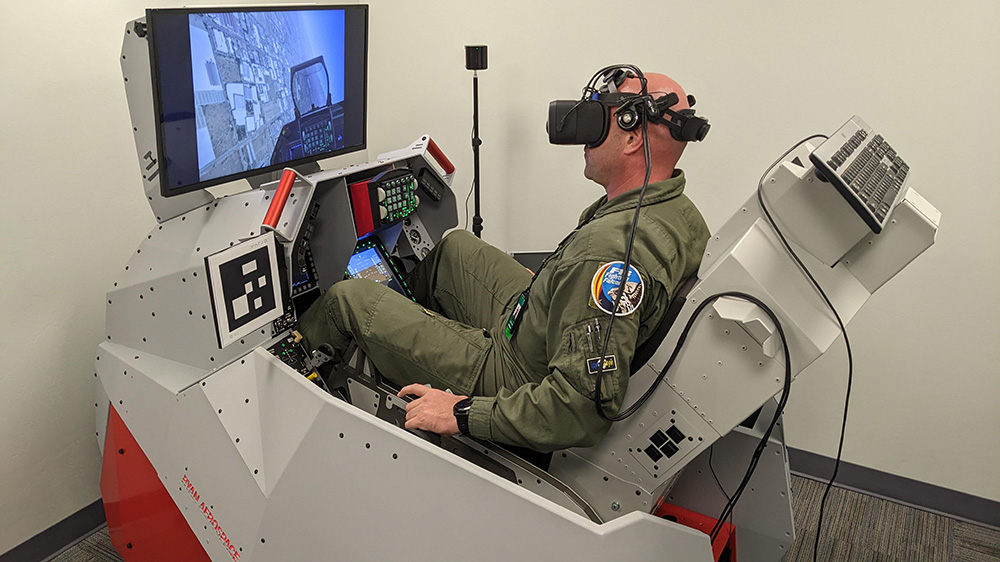
Vertex Solutions was selected by the Defense Innovation Unit (DIU) to prototype and integrate an F-16 Mixed Reality Flight Training Device (MR FTD) in support of the U.S. Air Force's Virtual Training for Air Dominance (VTRAD) program. Building on the Fighter/Bomber Fundamentals (FBF) T-38C training initiative, the effort marked Vertex's first mixed reality flight simulator prototype supporting an operational military aircraft platform. The reconfigurable F-16 trainer combines high-fidelity flight simulation, realistic cockpit controls, advanced avionics modeling, and open software architecture to expand access to advanced tactical aviation training.
THE CHALLENGE
ADVANCED FIGHTER TRAINING. LIMITED SIMULATOR ACCESS.
Preparing military pilots for advanced fighter operations requires realistic, repetitive training in complex aircraft systems, emergency procedures, and tactical flight scenarios. Traditional high-fidelity simulators are costly to acquire, maintain, and expand, limiting opportunities for accessible, individualized practice. The Air Force needed a more affordable, adaptable approach to advanced jet training that could support evolving operational requirements while reducing dependence on expensive, fixed-configuration simulation infrastructure.
VERTEX SOLUTION
OPERATIONAL FIGHTER FIDELITY. RECONFIGURABLE BY DESIGN.
Vertex leveraged its proven mixed reality simulation architecture to prototype an immersive F-16 training device featuring an interactive cockpit, force-feedback flight controls, accurate avionics modeling, and realistic aircraft performance. Physical switches, circuit breakers, and avionics panels support emergency procedures, instrument training, and mission checkride preparation, while simulated air-to-air and air-to-ground weapons employment expands tactical training capabilities. Built around an open software architecture and modular hardware, the solution enables rapid integration of new technologies, aircraft configurations, and training requirements without the cost of developing an entirely new simulator.
RESULTS & IMPACT
FROM PILOT TRAINING TO OPERATIONAL FIGHTER TRAINING.
The F-16 prototype effort expanded Vertex's mixed reality training technology beyond undergraduate pilot training into operational fighter aircraft applications. Building on its VTRAD T-38C and Pilot Training Transformation experience, Vertex demonstrated the adaptability of its modular simulation approach to increasingly complex aircraft and advanced training requirements. The F-16 configuration provides a foundation for accessible, high-fidelity procedural and tactical training while offering the potential for lower lifecycle costs through shared hardware, open architecture, and simplified facility requirements. The program reinforces Vertex's ability to rapidly adapt proven XR technologies to emerging military aviation training needs.
PERFORMANCE HIGHLIGHTS
F-16
Fighter Training
6'X4'
Compact Footprint
80%
Hardware Commonality
Open
Architecture
T-6B Virtual Reality Immersive Training Devices - U.S. Navy
PROGRAM OVERVIEW
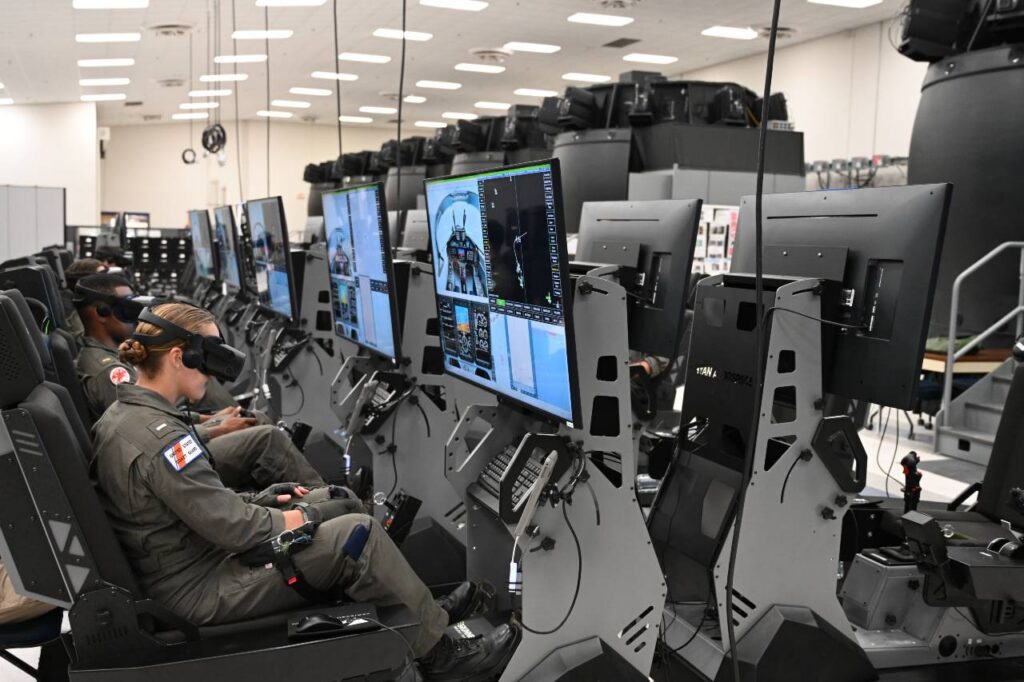
Vertex Solutions was awarded a five-year, $28 million ceiling, single-award IDIQ contract to deliver advanced extended reality training systems supporting the U.S. Navy's Naval Aviation Training Next initiative. Through two delivery orders, Vertex was contracted to provide 63 T-6B Immersive Training Devices (ITDs), expanding access to high-fidelity virtual reality flight training for undergraduate naval aviators. Building on proven technology developed through the U.S. Air Force's Pilot Training Transformation program, the reconfigurable devices combine realistic flight simulation, force-feedback controls, and open software architecture to deliver scalable, cost-effective training across Navy installations.
THE CHALLENGE
MEETING PILOT DEMAND. BREAKING TRAINING BOTTLENECKS.
The Navy faces increasing pressure to produce qualified pilots while managing limited simulator capacity, training resources, and rising operational costs. Traditional flight training infrastructure cannot always provide the accessibility and repetition student aviators need to build proficiency efficiently. To modernize undergraduate pilot training, the Navy required an affordable, scalable solution that could expand training capacity, support distributed learning, and evolve with changing aircraft configurations and training requirements without relying on expensive, purpose-built simulation infrastructure.
VERTEX SOLUTION
PROVEN SIMULATION. BUILT TO SCALE.
As prime software and hardware integrator, Vertex combined commercial simulation technologies, high-fidelity aircraft modeling, force-feedback controls, and reconfigurable hardware into a cohesive T-6B training solution. The VXR T-6 platform features an open software architecture, approximately 80% hardware commonality, and minimal facility requirements, enabling cost-effective deployment, upgrades, and sustainment. The first delivery order established 50 training devices, while the second added 13 more and 50 modernization retrofit kits to standardize existing systems. Vertex also provides installation, technical expertise, and on-site simulation support to maintain system availability and support continuous training operations.
RESULTS & IMPACT
63 TRAINING DEVICES. ONE SCALABLE TRAINING ECOSYSTEM.
Across two delivery orders, the U.S. Navy awarded Vertex contracts for 63 T-6B Immersive Training Devices and 50 modernization retrofit kits, strengthening its investment in scalable XR pilot training. Supporting training operations at NAS Corpus Christi and NAS Whiting Field, the program expands access to immersive flight training while establishing a common, upgradeable technology baseline. The modular architecture enables continued modernization without replacing entire training systems, supporting lower lifecycle costs and long-term flexibility. Building on successful Air Force and Navy programs, this effort demonstrates Vertex's ability to scale proven training technology into an enterprise-level solution designed to improve training accessibility, efficiency, and naval aviator production.
PERFORMANCE HIGHLIGHTS
63
T-6B Virtual Reality Immersive Training Devices
50
Modernization Kits
80%
Hardware Commonality
$28M
IDIQ Contract Ceiling
Project Corsair - T-45C Virtual Reality Immersive Training Devices - U.S. Navy
PROGRAM OVERVIEW
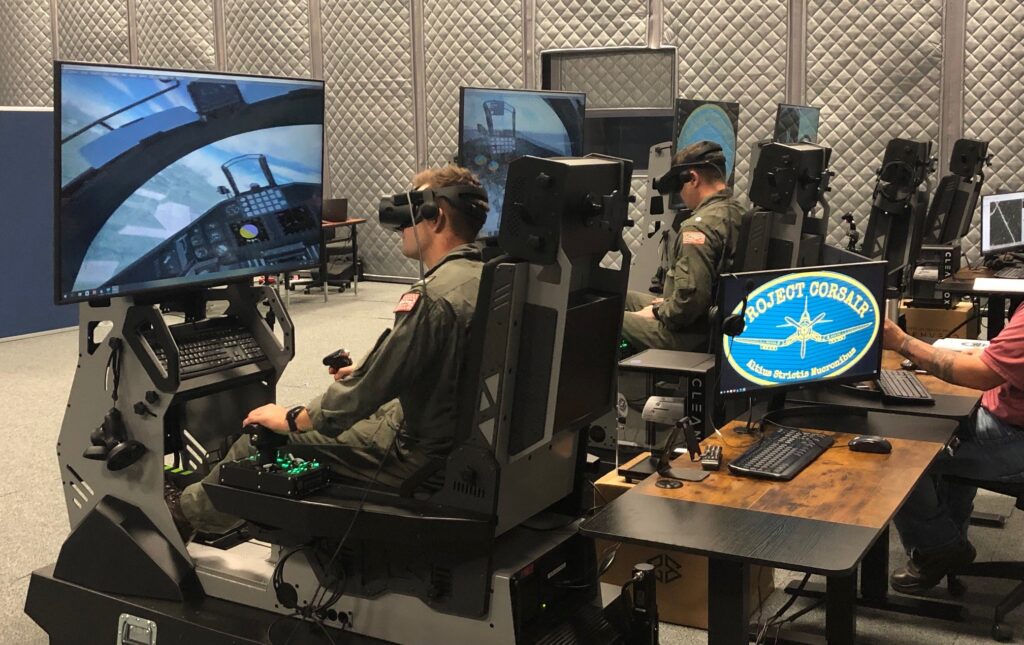
Vertex Solutions was contracted to deliver 12 T-45C Virtual Reality Training Devices (VTs) to support the U.S. Navy's Chief of Naval Air Training (CNATRA) at NAS Meridian, Mississippi, and NAS Kingsville, Texas. Building on proven simulator technology developed through the U.S. Air Force's Pilot Training Transformation (PTT) program, Project Corsair brings accessible, high-fidelity immersive training into the Navy's jet pilot training pipeline. The networked devices support individual and multi-aircraft training, including cockpit familiarization, formation flying, and basic air-to-air and air-to-ground maneuvers, while integrating instructor tools and on-site technical support.
THE CHALLENGE
EXPANDING TRAINING BEYOND THE SIMULATOR.
The Navy's existing simulators lacked the capacity and accessibility needed to provide student pilots with frequent, immersive practice throughout the T-45C training syllabus. Limited simulator availability constrained opportunities to reinforce foundational skills, practice complex maneuvers, and transition from basic knowledge to advanced flight competencies. CNATRA needed a scalable, cost-effective training solution that could increase repetitions, support multi-aircraft scenarios, and improve training accessibility without placing additional demands on operational aircraft or traditional simulators.
VERTEX SOLUTION
PROVEN TECHNOLOGY. NAVY-READY TRAINING.
Vertex adapted its reconfigurable XR flight simulation architecture to develop 12 T-45C Virtual Reality Training Devices with accurate aircraft performance modeling, cockpit avionics, and interactive controls. The locally networked simulators enable multiple students to train together in shared virtual environments, supporting formation flying and coordinated mission scenarios. Integrated instructor stations provide real-time oversight, simultaneous instruction, and maneuver demonstrations. Vertex's solution also includes installation, acceptance testing, technical documentation, and dedicated on-site support at both Navy installations to maintain system availability and support continuous training operations.
RESULTS & IMPACT
MORE ACCESS. MORE REPETITIONS. GREATER READINESS.
Project Corsair establishes a scalable immersive training capability across two Navy installations, expanding access to T-45C training through 12 networked virtual reality devices. The system is designed to provide student pilots with more opportunities for self-paced practice, instructor-guided training, and multi-aircraft mission rehearsal while reducing reliance on limited traditional simulator resources. Standardized configurations, dedicated technical support, and an adaptable architecture create a foundation for continued technology upgrades and future training capabilities. Project Corsair demonstrates how Vertex can leverage proven Air Force training technologies to address Navy-specific requirements and deliver integrated training solutions across military aviation programs.
PERFORMANCE HIGHLIGHTS
12
Virtual Reality Training Devices
2
Navy Installations
Networked
Mulit-Aircraft Training
On-site
Simulator Technical Support
AC-130J Virtual Reality Combat Mission Trainer (VR-CMT) - AFSOC
PROGRAM OVERVIEW
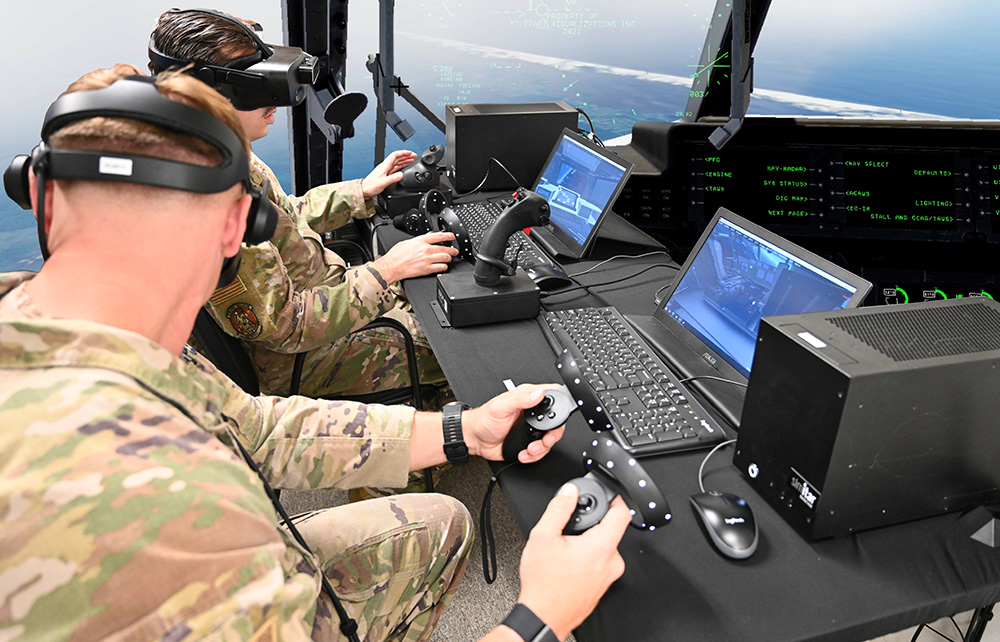
Vertex Solutions developed and delivered the AC-130J Virtual Reality Combat Mission Trainer (VR-CMT), a fully integrated, six-crew-position immersive training system funded by the Irregular Warfare Technical Support Directorate (IWTSD) in support of special operations aircrews. Designed to complement existing full-motion simulators, the VR-CMT enables individual and collective crew training, from basic checklists and emergency procedures to complex combat mission scenarios. Delivered in 2024, the portable, networked solution expands training accessibility while providing a scalable platform for mission rehearsal and distributed operations.
THE CHALLENGE
COMPLEX MISSIONS. LIMITED TRAINING CAPACITY.
AC-130J combat operations demand exceptional coordination across multiple crew positions, with aircrews required to execute complex procedures and make critical decisions in high-pressure environments. Traditional training depends on expensive, high-demand full-motion simulators, limiting opportunities for frequent, collaborative mission rehearsal. Special operations forces needed a flexible, cost-effective solution that could expand training capacity, support realistic multi-crew scenarios, and connect geographically separated personnel without increasing reliance on traditional simulator infrastructure.
VERTEX SOLUTION
SIX CREW POSITIONS. ONE INTEGRATED MISSION.
Vertex engineered a fully integrated virtual reality training environment connecting six AC-130J crew positions into a cohesive mission training system. The VR-CMT supports individual proficiency development, emergency procedures, crew coordination, and full-mission combat scenarios within a shared virtual environment. Its portable, expandable architecture enables geographically distributed training and supports Distributed Mission Operations (DMO), allowing crews to rehearse tactics, techniques, and procedures while preparing for joint and combined operations. Designed to augment existing full-motion simulators, the system provides greater flexibility to train across locations and mission requirements.
RESULTS & IMPACT
EXPANDING CAPACITY. STRENGTHENING MISSION READINESS.
Vertex successfully completed final delivery of the AC-130J VR-CMT in 2024 following user acceptance testing with active-duty AC-130J aircrews, who provided highly positive feedback on the system's realism and accuracy. The six-position training solution provides a new capability for individual and collective crew training while reducing dependence on full-motion simulators for selected training activities. Program projections indicate the VR-CMT could enable AC-130J training programs to train up to four additional crews annually. With distributed mission training capabilities and worldwide connectivity, the system demonstrates Vertex's ability to deliver integrated, mission-ready training solutions that support operational readiness and training scalability.
PERFORMANCE HIGHLIGHTS
6
Crew Positions
Up to 4
Additional Crews Per Year
DMO
Capable
2024
Final Delivery
AC-130J Virtual Reality Part-Task Trainer - AFSOC
PROGRAM OVERVIEW
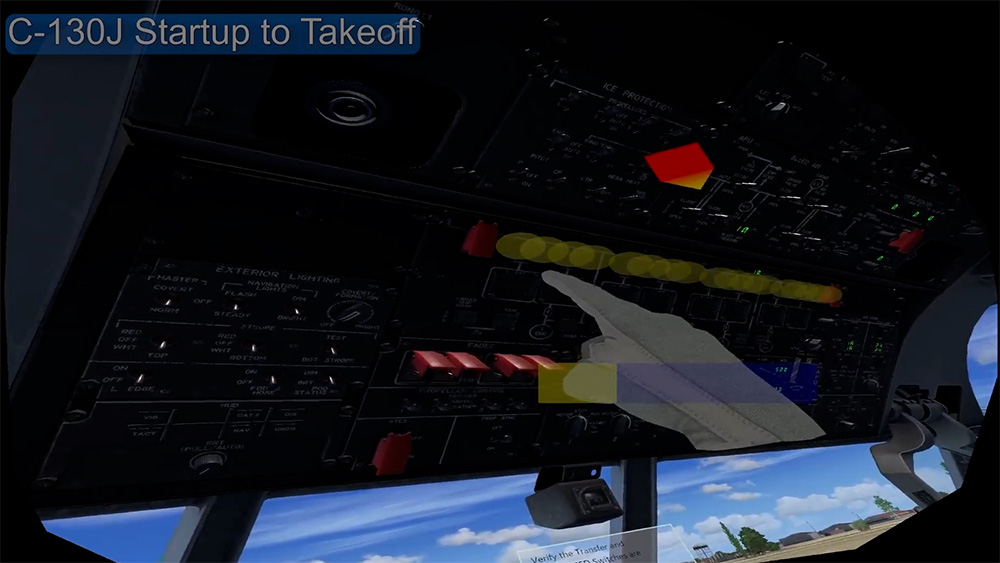
Vertex Solutions developed a high-fidelity Virtual Reality Part-Task Trainer to support U.S. Air Force Special Operations Command (AFSOC) aircrew training for the AC-130U gunship. Leveraging commercial VR hardware and Virtual Battlespace (VBS) technology from Bohemia Interactive Simulations, the system recreates a detailed, interactive aircraft cockpit for familiarization, checklist execution, and initial qualification training. The portable solution combines immersive simulation, natural hand interactions, and intelligent tutoring to provide realistic, cost-efficient training while reducing dependence on expensive full-mission simulators.
THE CHALLENGE
FREEING FULL-MISSION SIMULATORS FOR THE MISSION.
Traditional aircrew training relies on expensive, high-demand full-mission simulators for tasks ranging from basic cockpit familiarization to complex mission rehearsal. Using these resources for repetitive checklist training limits availability for advanced instruction and increases training costs. AFSOC needed a flexible, affordable solution that allowed aircrews to practice cockpit procedures, develop familiarity with aircraft systems, and build proficiency without consuming valuable full-mission simulator time or requiring continuous instructor oversight.
VERTEX SOLUTION
FULL COCKPIT IMMERSION. WITHOUT THE FULL SIMULATOR.
Vertex integrated commercial VR hardware, high-fidelity 3D cockpit modeling, and BISim's Virtual Battlespace technology to create an interactive AC-130U crewstation. The system replicates pilot and copilot positions, instruments, controls, switches, and displays, allowing students to execute checklists using natural hand movements while receiving realistic system responses. An integrated intelligent tutor delivers automated instruction, real-time assessment, and performance tracking. Built on a flexible, standards-based architecture, the solution also supports whole-earth virtual environments, mission rehearsal, and adaptation to additional aircraft platforms.
RESULTS & IMPACT
MORE TRAINING ACCESS. LESS SIMULATOR DEPENDENCE.
The AC-130U Part-Task Trainer provides AFSOC with a portable, cost-efficient alternative for cockpit familiarization and procedural training, allowing basic training activities to shift away from expensive full-mission simulators. Automated instruction and assessment reduce the need for continuous instructor involvement while enabling repeatable, self-paced practice. The adaptable architecture supports future aircraft configurations, expanded crew positions, and additional mission training applications without requiring entirely new hardware. The program demonstrates Vertex's ability to integrate immersive technology, simulation software, and learning expertise into scalable training solutions that maximize the value of existing training resources.
PERFORMANCE HIGHLIGHTS
2
Crew Stations
Intelligent
Tutoring System
Whole-Earth
Simulation
Open
Architecture
AC-130J Virtual Reality Fuel Cell Maintenance Trainer - AFSOC
PROGRAM OVERVIEW
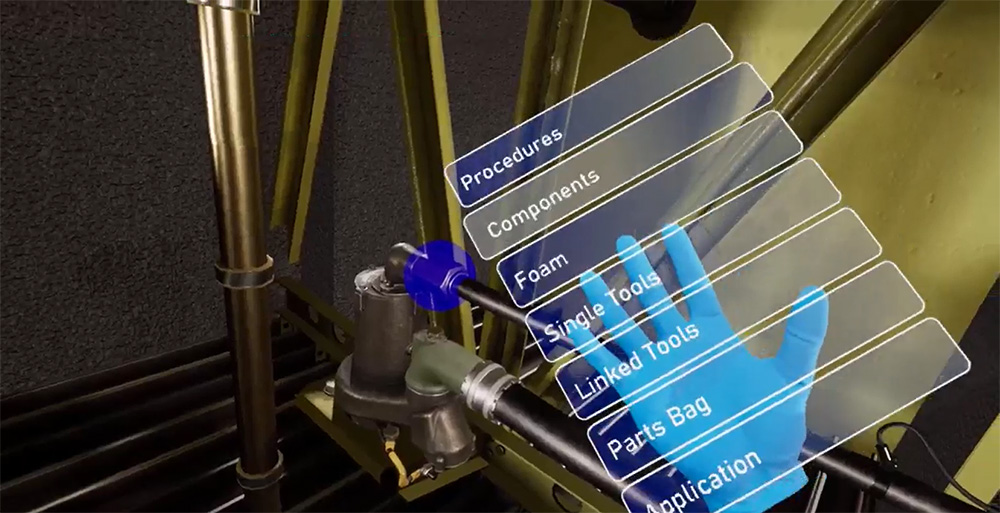
Vertex Solutions developed an immersive extended reality (XR) maintenance training system to support U.S. Air Force AC-130J fuel cell maintenance instruction. Designed to reduce the risks associated with training inside confined aircraft fuel tanks, the system allows maintainers to learn complex procedures, familiarize themselves with specialized tools, and practice maintenance tasks in a realistic virtual environment. Developed over a 12-month period, the solution incorporates approximately 200 detailed parts and assemblies and 13 maintenance procedures, providing a safer, more accessible approach to hands-on technical training.
THE CHALLENGE
HIGH-RISK MAINTENANCE. LIMITED TRAINING OPPORTUNITIES.
AC-130J fuel cell maintenance requires technicians to work within confined spaces, navigate physical limitations, and perform complex procedures where mistakes can result in personal injury or aircraft damage. Traditional hands-on training introduces safety risks while requiring access to operational aircraft, potentially increasing equipment downtime. The Air Force needed a safer, more efficient way to prepare maintainers for these demanding tasks without exposing personnel or valuable aircraft to unnecessary risk.
VERTEX SOLUTION
REALISTIC MAINTENANCE TRAINING. WITHOUT THE RISK.
Vertex combined immersive XR technology, detailed 3D aircraft models, and interactive procedural training to recreate the AC-130J fuel cell maintenance environment. The system incorporates approximately 200 modeled parts and assemblies and 13 procedures, each containing more than 15 steps. Trainees can familiarize themselves with specialized tools, navigate confined spaces, and rehearse maintenance tasks while accounting for the physical constraints of the aircraft. By integrating realistic equipment representations with structured, hands-on learning, Vertex created a training environment that supports technical proficiency without requiring access to an operational aircraft for every training event.
RESULTS & IMPACT
SAFER TRAINING. GREATER MAINTENANCE READINESS.
The AC-130J Fuel Cell Maintenance Trainer provides a safer, more accessible way to prepare maintainers for complex, high-risk maintenance operations. The system expands opportunities for tool and component familiarization, procedural practice, and situational awareness development while reducing the need to use operational aircraft for initial training. By enabling repeatable practice in a controlled virtual environment, the solution supports improved student performance, reduced exposure to hazardous training conditions, and greater flexibility in maintenance instruction. The program demonstrates Vertex's ability to transform complex aircraft maintenance requirements into immersive, mission-focused training solutions.
PERFORMANCE HIGHLIGHTS
13
Maintenance Procedures
15+
Steps Per Procedure
~200
Parts & Assemblies
Low-Risk
Virtual Training
Military Free-Fall Jumpmaster Virtual Reality Training System (MFF JM VTS) - CD&I
PROGRAM OVERVIEW
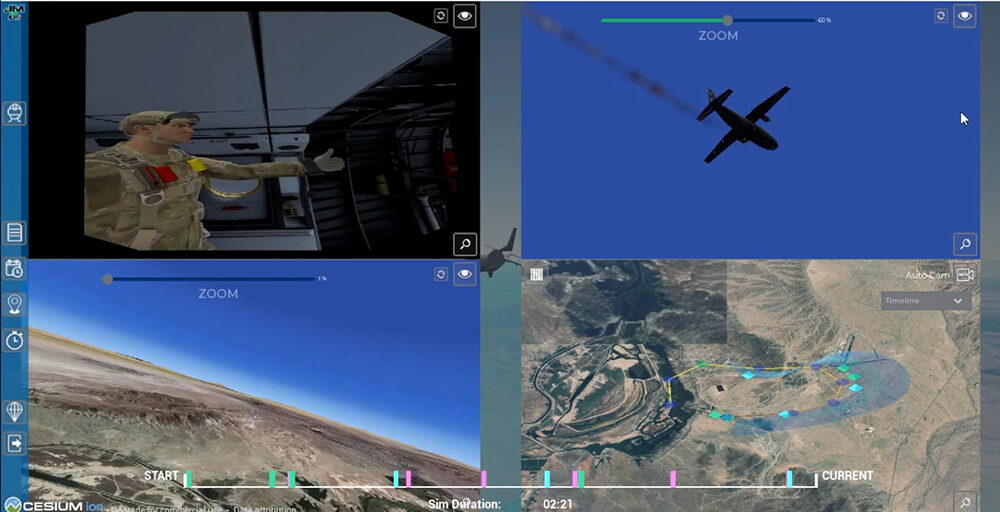
Vertex Solutions developed and delivered the Military Free-Fall Jumpmaster Virtual Training System (MFF JM VTS) for the Irregular Warfare Technical Support Directorate (IWTSD) in support of U.S. Special Operations Command (USSOCOM). The system combines immersive virtual reality, realistic terrain data, and physical aircraft mockups to modernize jumpmaster training. Designed for portability and affordability, MFF JM VTS allows military personnel to rehearse spotting techniques, aircraft procedures, emergency scenarios, and precision airborne operations in a safe, controlled training environment.
THE CHALLENGE
PRECISION TRAINING WITHOUT THE FLIGHT HOURS.
Military free-fall jumpmasters must master complex aircraft procedures, accurately identify drop zones, and execute critical commands under demanding operational conditions. Traditional training relies heavily on aircraft availability, specialized facilities, and costly flight operations, limiting opportunities for frequent, repeatable practice. USSOCOM needed a portable, cost-effective solution that could realistically replicate airborne operations across multiple aircraft platforms while improving access to training without increasing operational risk.
VERTEX SOLUTION
REALISTIC AIRBORNE TRAINING. GROUNDED IN INNOVATION.
Vertex integrated high-fidelity VR environments, real-world terrain imagery, realistic aircraft audio, and physical ramp-and-door mockups into a comprehensive jumpmaster training system. Supporting CASA 212, C-27, C-130, CH-47, and V-22 aircraft, the system enables trainees to practice spotting techniques, jump commands, aircraft interactions, and emergency procedures. The solution accommodates six individual users and includes an instructor station for scenario customization, remote observation, and performance recording. Integration with the Moodle Learning Management System provides additional tools for managing and tracking training.
RESULTS & IMPACT
MISSION READINESS WITHOUT LEAVING THE GROUND.
Vertex successfully completed final delivery of the MFF JM VTS in 2024, providing USSOCOM end users with a portable, immersive training capability supporting five aircraft platforms. The system expands opportunities for repeatable jumpmaster training without requiring an operational aircraft for every practice event, creating a cost-effective alternative for rehearsing critical airborne procedures. With instructor-controlled scenarios, performance recording, and integrated learning management, MFF JM VTS demonstrates how immersive simulation can improve training accessibility, standardization, and readiness while reducing dependence on traditional airborne training resources.
PERFORMANCE HIGHLIGHTS
5
Aircraft Platforms
6
Individual Users
Real-World
Terrain Data
Instructor
Control Station
MK 16 Underwater Breathing Apparatus Simulator (UBASim) - U.S. Navy EOD
PROGRAM OVERVIEW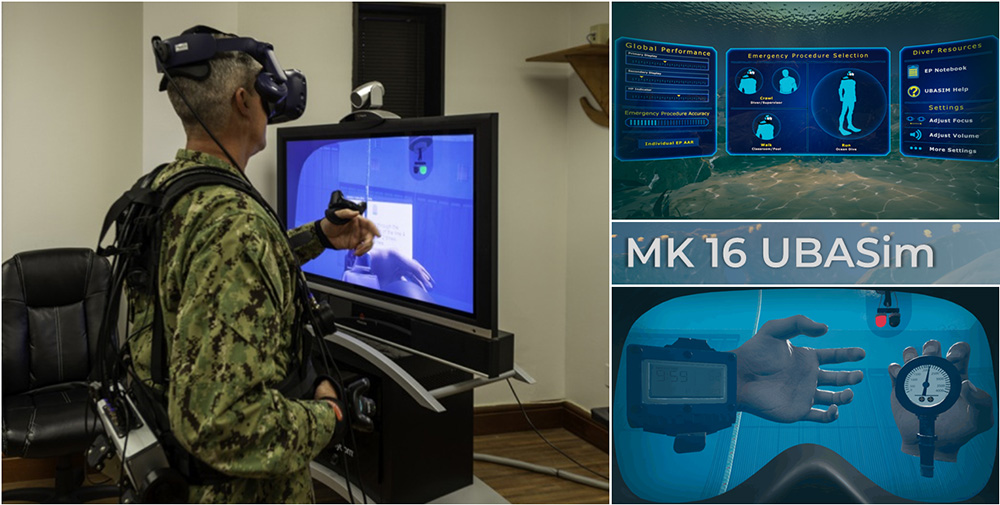
Vertex Solutions developed the MK 16 Underwater Breathing Apparatus Simulator (UBASim), a portable mixed reality training system designed to improve underwater emergency procedures training. Combining immersive virtual environments, wearable hardware, high-fidelity physics modeling, and intelligent tutoring, UBASim replicates the operation and behavior of the MK 16 diving apparatus. Packaged in a single Pelican case, the system enables realistic, low-risk training virtually anywhere, giving military divers opportunities to practice critical procedures without entering the water.
THE CHALLENGE
PREPARING DIVERS FOR THE UNEXPECTED.
Underwater emergencies demand immediate, accurate responses in high-stress environments where mistakes can have serious consequences. Traditional training requires specialized facilities, equipment, and instructor resources, limiting opportunities to practice complex equipment failures and emergency procedures repeatedly. Divers need a realistic, accessible training environment where they can develop proficiency, build confidence, and rehearse critical responses without exposure to underwater hazards.
VERTEX SOLUTION
REALISTIC UNDERWATER TRAINING. WITHOUT THE WATER.
Vertex integrated mixed reality technology with a wearable MK 16 emulator that replicates the physical controls, valves, gauges, and functionality of the operational diving apparatus. Advanced physics models simulate real-time gas flows, system pressures, diver movement, and decompression effects, including complex equipment failures. Motion sensors allow students to navigate virtual underwater environments through physical swimming movements, while an intelligent tutor monitors performance, adjusts scenarios, and provides individualized feedback and remediation.
RESULTS & IMPACT
MISSION-CRITICAL TRAINING. ANYTIME, ANYWHERE.
UBASim delivers a highly realistic, portable training capability that enables divers to rehearse emergency procedures in a controlled, low-risk environment. By combining accurate physical controls with immersive simulation and automated performance tracking, the system supports repeatable practice, individualized instruction, and objective assessment of student performance. Its single-case portability reduces reliance on dedicated underwater training facilities for simulated emergency procedures, expanding access to training and demonstrating the potential of mixed reality to prepare divers for mission-critical situations.
PERFORMANCE HIGHLIGHTS
Single Case
Man-portable training system
Real-Time
High-fidelity physics simulation
Low Risk
Emergency procedures practice
Adaptive
Intelligent tutoring and remediation
CH-47 Maintenance - Instructor Training Models
PROGRAM OVERVIEW
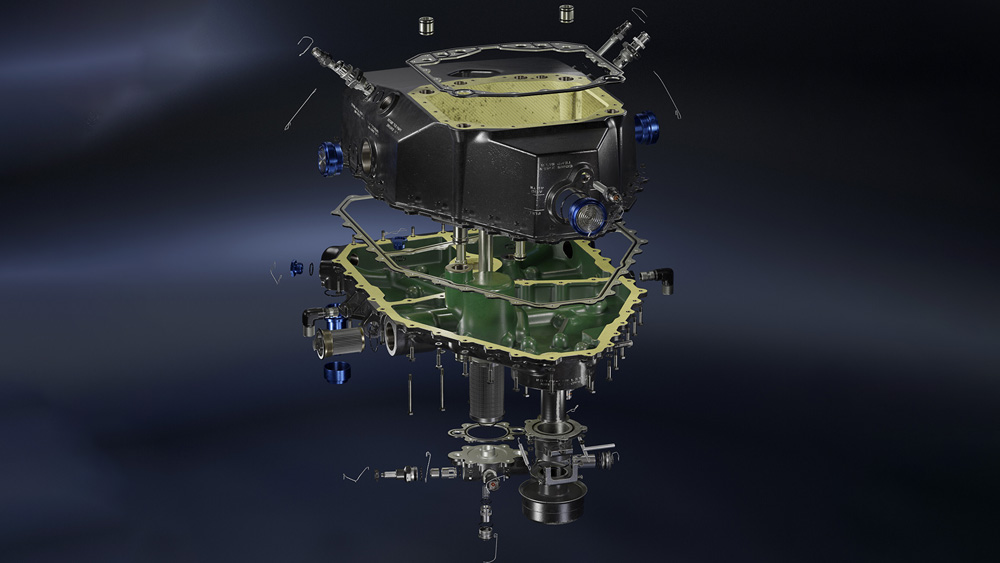
Vertex Solutions developed high-precision, photorealistic 3D models of CH-47 Chinook helicopter components for the U.S. Army Aviation Center of Excellence (USAACE). Designed to support instructor-led classroom training, these models provide detailed visual representations of aircraft systems and mechanical assemblies, helping instructors teach system operations and maintenance procedures. The project included 164 assemblies, about 3,053 parts, and 7,704 individual pieces, delivering accurate digital training assets for Army aviation maintenance instruction.
THE CHALLENGE
PRECISION WHERE IT MATTERS.
Training aviation maintenance personnel requires an accurate understanding of complex aircraft systems and components. USAACE needed highly detailed 3D models that could support classroom instruction, rendered visualizations, and interactive training exercises. Each model had to meet exacting dimensional and visual standards while remaining compatible with the Army's existing training applications, including nGrain's proprietary 3KO format.
VERTEX SOLUTION
ENGINEERED FOR ACCURACY. BUILT FOR TRAINING.
Vertex combined commercial 3D modeling software, extensive photographic references, and high-resolution scanning technologies to develop photorealistic, dimensionally accurate CH-47 components. Working closely with the customer, Vertex modeled each assembly at a 1:1 scale with tolerances of 0.001, ensuring precise fit and function. The completed assets were delivered in 3D Studio Max and nGrain-compatible formats to support integration with existing instructor-led training environments.
RESULTS & IMPACT
THOUSANDS OF PARTS. EXACTING PRECISION.
Vertex delivered a comprehensive library of high-fidelity digital aircraft components, including 164 assemblies, approximately 3,053 parts, and 7,704 individual pieces. Built to exacting specifications and delivered in formats compatible with the customer's training applications, these models provided USAACE with detailed visual assets for classroom instruction and interactive maintenance training. The project demonstrates Vertex's ability to transform complex mechanical systems into precise, training-ready digital content that supports technical education and aircraft systems familiarization.
PERFORMANCE HIGHLIGHTS
164
Assemblies
3053
Parts
7704
Individual Pieces
1:1
Model Scale
commercial aviation experience
APPLIED EXPERIENCE FOR COMMERCIAL AVIATION.
Leveraging our defense-proven expertise, Vertex Solutions delivers innovative training technologies for commercial aviation and specialized training applications.
archer aviation
archer midnight evtol flight training device
FAA
COLLABORATIVE RESEARCH AND DEVELOPMENT AGREEMENT (CRADA)
LIFT Academy
DA40 Immersive Training Devices (ITDs)
Archer Aviation Midnight eVTOL Mixed Reality Training Device - Archer Aviation
PROGRAM OVERVIEW
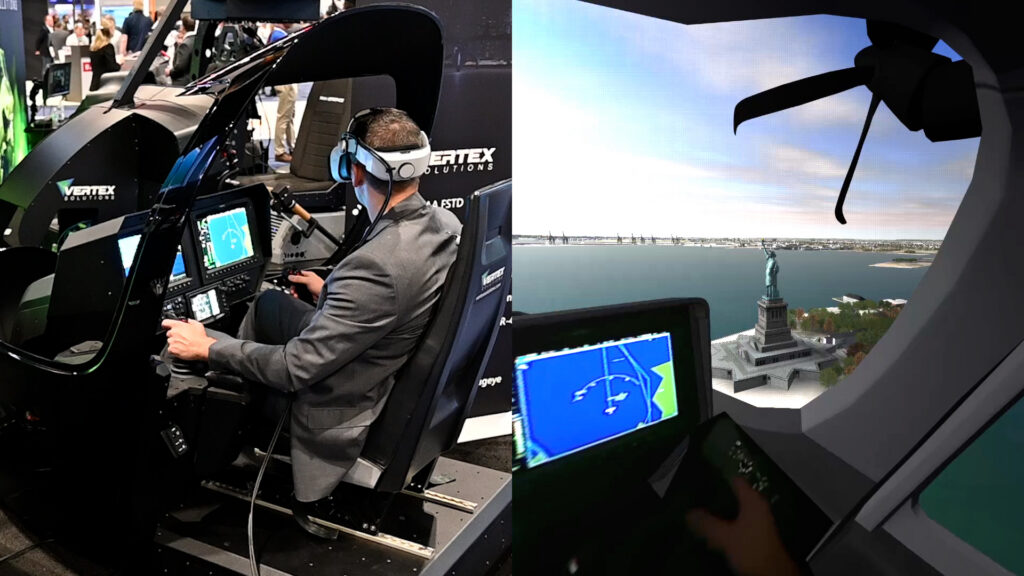
Vertex Solutions partnered with Archer Aviation to develop a high-fidelity Mixed Reality Flight Training Device (MR FTD) for Archer's Midnight electric vertical takeoff and landing (eVTOL) aircraft. Completed in 2024, the simulator was developed in connection with Archer's work with the U.S. Air Force's AFWERX program to advance next-generation pilot training for advanced air mobility (AAM). The system integrates production aircraft hardware, OEM-based digital twin modeling, realistic flight dynamics, and immersive mixed reality technology into a scalable training platform designed to support future commercial and military eVTOL operations.
THE CHALLENGE
NEW AIRCRAFT. NEW TRAINING REQUIREMENTS.
The emergence of electric vertical takeoff and landing aircraft creates new challenges for pilot training, including accurately replicating unfamiliar aircraft systems, flight characteristics, and operational procedures. As Archer Aviation prepared for future Midnight operations, it needed a realistic, adaptable training solution capable of supporting pilot familiarization, procedural training, and emergency scenarios. Traditional simulation approaches presented challenges in cost, scalability, and technology integration, creating an opportunity for a more flexible mixed reality training platform.
VERTEX SOLUTION
REAL AIRCRAFT SYSTEMS. IMMERSIVE TRAINING TECHNOLOGY.
Vertex served as the lead systems integrator, bringing together Archer Midnight aircraft hardware and flight modeling, RYAN AEROSPACE's custom simulator platform, Varjo XR-4 mixed reality headsets, and Aechelon Technology's Nucleus image generator. The system incorporates OEM-derived digital twin models, Garmin 3000 avionics integration, interactive cockpit controls, and an Instructor Operator Station for scenario management and performance monitoring. Built on an open, reconfigurable architecture, the simulator combines physical cockpit interactions with immersive virtual environments to support aircraft familiarization, emergency procedures, and mission rehearsal while allowing future technology upgrades and expanded training applications.
RESULTS & IMPACT
ADVANCING MIXED REALITY INTO eVTOL AVIATION.
Vertex and Archer successfully completed the Midnight Mixed Reality Flight Training Device in 2024, demonstrating the application of high-fidelity XR simulation technology to a new generation of electric aircraft. Showcased at I/ITSEC 2024, the system brought together aircraft-specific hardware, digital twin modeling, advanced visual systems, and instructor capabilities within a unified training environment. Although the device did not achieve FAA or GCAA qualification, it demonstrated a technical approach designed to support future eVTOL pilot training requirements. The program highlights Vertex's ability to apply proven military simulation expertise to emerging commercial aviation platforms, integrating complex technologies into scalable, mission-focused training solutions.
PERFORMANCE HIGHLIGHTS
eVTOL
Mixed Reality Flight Simulator
OEM
Avionics Integration
Digital Twin
Fidelity
Instructor
Operator Station
FAA CRADA Immersive Flight Simulation Research - FAA
PROGRAM OVERVIEW
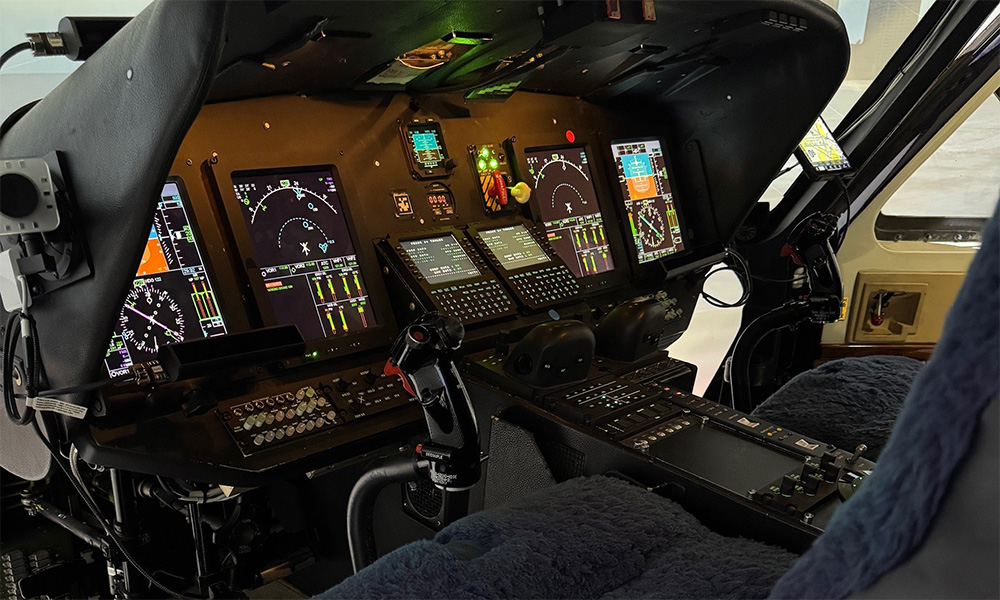
Vertex Solutions was selected by the Federal Aviation Administration (FAA) to lead an immersive flight simulation research initiative under a Cooperative Research and Development Agreement (CRADA). Announced in December 2024, the collaboration brings together Vertex Solutions, Varjo, and Aechelon Technology to investigate how virtual reality (VR), mixed reality (MR), and extended reality (XR) technologies can support future pilot training and flight simulator qualification standards. The research focuses on integrating advanced XR visualization into the FAA's Sikorsky S-76 helicopter simulator to evaluate how head-mounted display (HMD) performance affects pilot workload, flight performance, and training effectiveness.
THE CHALLENGE
NEW TECHNOLOGY. UNDEFINED STANDARDS.
Traditional flight simulator qualification standards were developed around conventional visual display systems, creating uncertainty about how immersive XR technologies should be evaluated for regulated aviation training. Critical factors such as display resolution, field of view, and system latency can influence pilot perception, workload, and performance, yet their minimum acceptable specifications require additional research. The FAA needed a structured, evidence-based approach to determine how immersive flight simulation technologies could be assessed and potentially incorporated into future aviation training and simulator qualification requirements.
VERTEX SOLUTION
INTEGRATING TECHNOLOGY. ADVANCING FLIGHT SIMULATION RESEARCH.
As the lead industry systems integrator, Vertex brings together Varjo's advanced XR head-mounted displays, Aechelon's high-fidelity visual simulation technology, and Vertex's expertise in immersive flight training systems. The collaborative effort is designed to enhance the FAA's S-76 helicopter simulator with virtual and mixed reality visualization, creating a configurable research environment for evaluating HMD performance. Through controlled flight scenarios, FAA pilots can assess variations in latency, field of view, and resolution while researchers examine their effects on pilot workload and flight performance. The integrated system supports objective research into the technical requirements necessary for effective XR-based pilot training.
RESULTS & IMPACT
SUPPORTING THE FUTURE OF FLIGHT SIMULATOR STANDARDS.
The FAA's selection of Vertex and its technology partners established an industry-government collaboration focused on the technical evaluation of immersive flight simulation. The initiative is designed to generate research data identifying how XR display specifications influence pilot workload, performance, and training effectiveness, with findings intended to inform future FAA guidance and flight simulator qualification decisions. Although final research outcomes and regulatory changes have not been publicly confirmed in the supporting materials, the collaboration demonstrates Vertex's role in advancing the technical foundation for next-generation aviation training. It also reinforces the company's ability to integrate advanced simulation technologies for both military and commercial aviation applications.
PERFORMANCE HIGHLIGHTS
FAA
Research Collaboration
3
XR Display Variables
S-76
Research Simulator
3
Operator Station
DA40 Virtual Reality Immersive Training Devices - Republic Airlines LIFT Academy
PROGRAM OVERVIEW
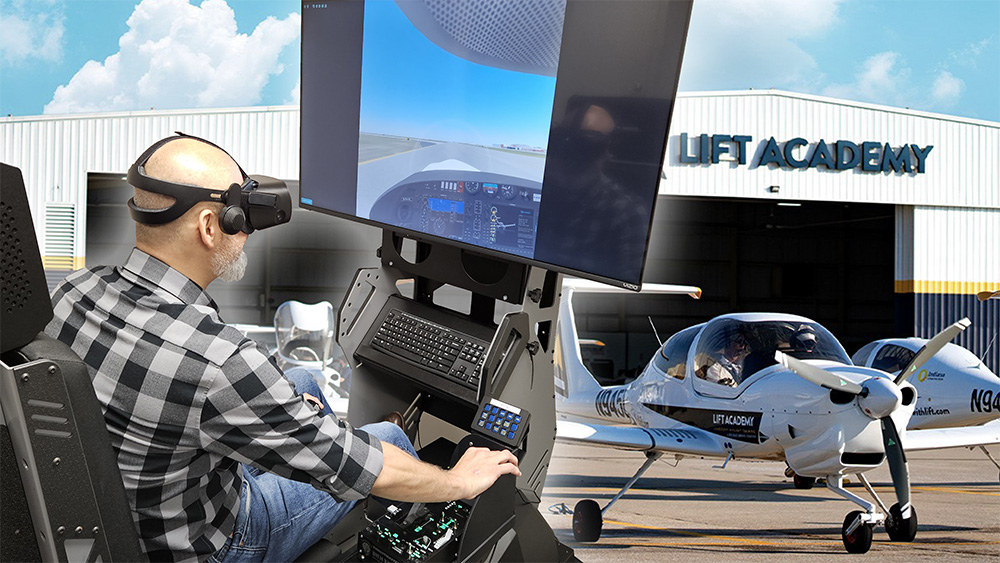
Vertex Solutions partnered with Republic Airways' Leadership In Flight Training (LIFT) Academy to integrate Diamond DA40 Virtual Reality Immersive Training Devices (ITDs) into its commercial pilot training program. Announced in January 2023, the partnership marked an early adoption of military-proven extended reality (XR) flight simulation technology in commercial airline pilot training. Building on Vertex's success with U.S. Air Force and Navy undergraduate pilot training programs, the initiative combines high-fidelity virtual flight simulation, realistic cockpit controls, and immersive learning technology to expand training accessibility and support LIFT Academy's accelerated pilot training curriculum.
THE CHALLENGE
BUILDING MORE PILOTS. WITHOUT MORE BOTTLENECKS.
Commercial aviation faces growing demand for qualified pilots, placing pressure on flight schools to increase training capacity while maintaining high standards of safety and proficiency. Traditional flight training depends on aircraft availability, instructor schedules, and expensive flight simulators, limiting opportunities for frequent, repetitive practice. LIFT Academy needed a scalable, cost-effective solution that could help students develop foundational flying skills, reinforce procedures, and prepare for aircraft training while supporting its accelerated pathway to professional airline careers.
VERTEX SOLUTION
MILITARY-PROVEN TECHNOLOGY. COMMERCIAL PILOT TRAINING.
Vertex integrated its reconfigurable Diamond DA40 virtual reality flight simulators into LIFT Academy's training ecosystem, leveraging immersive training technologies previously demonstrated in U.S. military pilot training programs. The devices combine high-fidelity aircraft simulation, realistic flight controls with force feedback, and an open software architecture to create an accessible, interactive training experience. With compact footprints, approximately 80% hardware commonality across Vertex's broader simulator platform, and minimal facility requirements, the ITDs support flexible deployment and repeated practice while reducing reliance on operational aircraft and conventional simulators for selected training activities.
RESULTS & IMPACT
PROVEN MILITARY INNOVATION. EXPANDING INTO COMMERCIAL AVIATION.
The LIFT Academy partnership marked an important milestone in bringing Vertex's military-proven immersive flight training technology into commercial aviation. The integration of DA40 Virtual Reality Immersive Training Devices expanded LIFT's training capabilities with a scalable solution designed to improve student access, training repetition, and instructional efficiency. Supporting the approach, results previously reported from U.S. military programs included a 40% reduction in training time, up to 70% faster progression to first solo, and a 15% improvement in student performance. While these outcomes were not measured specifically at LIFT Academy, the partnership demonstrated the potential to transfer proven XR training technologies into commercial pilot education and support more efficient pathways to airline pilot careers.
PERFORMANCE HIGHLIGHTS
5
Immersive Training Devices (ITDs)
Republic Airways
LIFT Academy
DA40
Virtual Reality Flight Simulator
Dual-Use
Military to Commercial Technology
international experience
DELIVERING ADVANCED TRAINING SOLUTIONS WORLDWIDE.
Partnering with global defense organizations to deliver tailored training solutions that build capability and strengthen readiness.
BAE SYSTEMS (UK)
PROJECT ODYSSEY LITE ELECTRONIC WARFARE FIGHTER TRAINER (EWFT)
colombian aerospace force
t-6C immersive training devices (itd)
vietnam air defence
t-6C immersive training devices (itd)
ROYAL THAI AIR FORCE
T-6C IMMERSIVE TRAINING DEVICES (ITDS)
Project OdySSEy Lite Electronic Warfare Fighter Trainer (EWFT) - BAE Systems (UK)
PROGRAM OVERVIEW
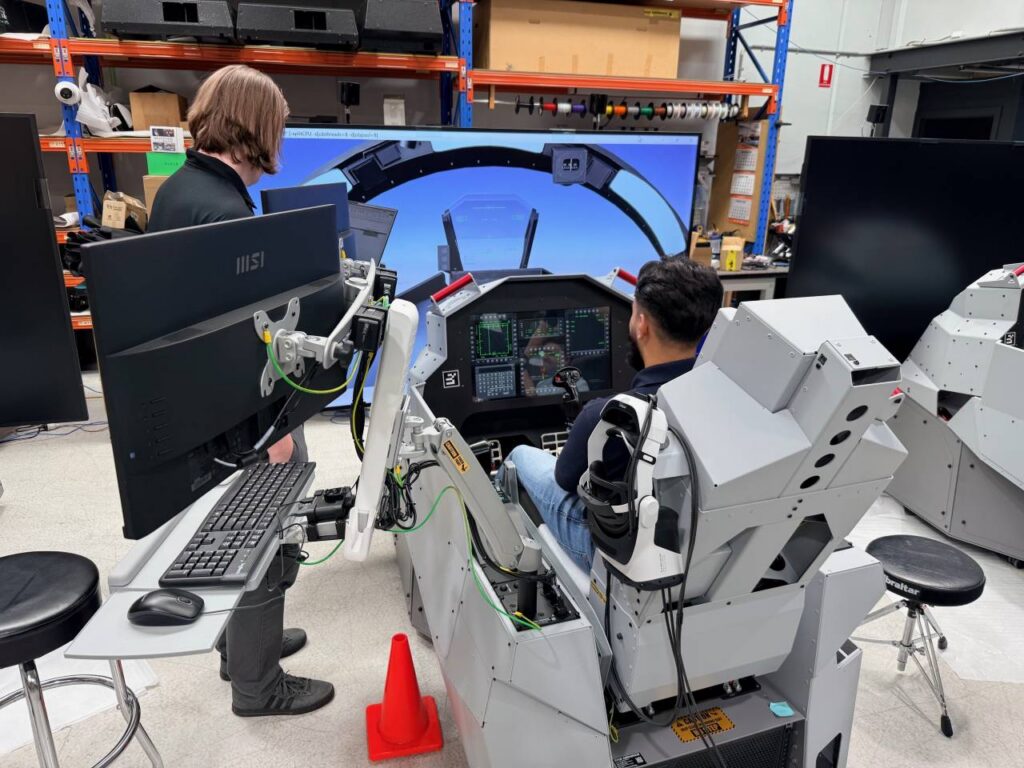
Vertex Solutions was awarded a contract by BAE Systems to develop and deliver five reconfigurable mixed reality Targeted Fidelity Training Devices (TFTDs) supporting Project OdySSEy, an advanced synthetic training initiative designed to connect military forces across air, land, sea, space, and cyber domains. Serving as prime contractor and systems integrator, Vertex partnered with RYAN AEROSPACE and SASimulations to develop an open-architecture fast-jet training platform supporting electronic warfare (EW), air-to-air and air-to-ground weapons employment, and mission rehearsal. The program builds on Vertex's proven military flight simulation technologies to support scalable, distributed training for modern combat operations.
THE CHALLENGE
MODERN WARFARE. COMPLEX TRAINING DEMANDS.
Modern combat aviation requires pilots to prepare for increasingly complex threats, electronic warfare environments, and coordinated multi-domain operations. Traditional high-fidelity flight simulators can be costly, aircraft-specific, and difficult to integrate into larger distributed training environments. BAE Systems needed a flexible, cost-effective training solution that could support realistic fighter tactics, mission rehearsal, and electronic warfare procedures while connecting with a broader synthetic training ecosystem. The challenge was delivering mission-relevant simulation capabilities without the cost and complexity of traditional full-scale training infrastructure.
VERTEX SOLUTION
TARGETED FIDELITY. MAXIMUM TRAINING FLEXIBILITY.
Vertex integrated reconfigurable mixed reality simulator hardware, fighter aircraft simulation software, and open-architecture technologies into a scalable Electronic Warfare Fighter Trainer. Developed with RYAN AEROSPACE and SASimulations, the platform supports air-to-air and air-to-ground weapons employment, electronic warfare procedures, and mission rehearsal within a configurable fourth-generation fighter simulation environment. Its Distributed Interactive Simulation (DIS) capabilities enable interoperability with other training systems for distributed mission training. Drawing on proven technology from the USAF's Pilot Training Transformation, Multi-Place Mixed Reality, and VTRAD programs, Vertex designed the solution for adaptability, future upgrades, and integration into BAE Systems' Project OdySSEy synthetic training environment.
RESULTS & IMPACT
FIVE TRAINING DEVICES. ONE CONNECTED TRAINING VISION.
The BAE Systems contract established Vertex as prime contractor for five mixed reality Targeted Fidelity Training Devices supporting Project OdySSEy. The effort encompasses simulator design, manufacturing, testing, commissioning, and lifecycle support, demonstrating Vertex's ability to deliver integrated training solutions beyond the initial hardware. Built around a reconfigurable, DIS-enabled architecture, the systems are designed to expand access to mission rehearsal, electronic warfare training, and distributed fighter simulation without the overhead of traditional full-mission simulators. The program reinforces Vertex's growing role in international defense training and its ability to integrate proven technologies into scalable, multi-domain synthetic training ecosystems.
PERFORMANCE HIGHLIGHTS
5
Mixed Reality Training Devices
EW
Weapons Training
DIS
Enabled
Open
Architecture
T-6C Immersive Training Devices (ITDs) - Colombian Aerospace Force
PROGRAM OVERVIEW
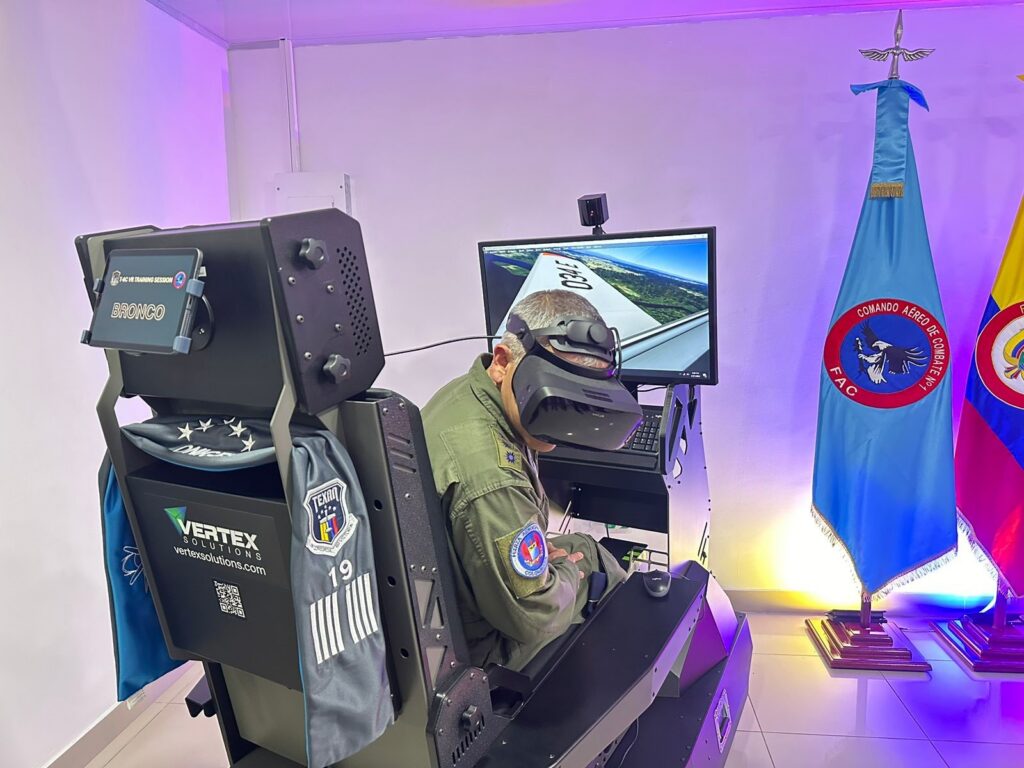
Vertex Solutions delivered T-6C Virtual Reality Immersive Training Devices (ITDs) to the Colombian Aerospace Force (Fuerza Aeroespacial Colombiana, FAC), supporting the establishment of its first Virtual Reality Simulation Center at Air Combat Command No. 1 in Puerto Salgar, Colombia. Completed in 2024, the program marked Vertex's first international sale and expanded its military-proven XR flight simulation technology into the Latin American defense aviation market. The reconfigurable T-6C flight simulators provide high-fidelity, immersive training environments that enable military pilots to practice flight maneuvers, emergency procedures, and complex scenarios without the cost or risk of operating actual aircraft.
THE CHALLENGE
EXPANDING PILOT PROFICIENCY. REDUCING TRAINING RISK.
Military pilot training requires frequent practice, realistic scenarios, and opportunities to develop critical decision-making skills. Traditional training depends heavily on operational aircraft, fuel, maintenance resources, and instructor availability, creating significant costs and limiting opportunities for repetition. The Colombian Aerospace Force needed a more accessible, cost-effective training solution that could strengthen pilot proficiency, support emergency procedure training, and expand training capacity without increasing operational demands on its aircraft fleet.
VERTEX SOLUTION
PROVEN TECHNOLOGY. ADAPTED FOR GLOBAL MISSIONS.
Vertex delivered reconfigurable T-6C virtual reality flight simulators leveraging the same immersive training architecture proven in U.S. Air Force and Navy pilot training programs. The systems combine high-fidelity aircraft simulation, interactive cockpit controls, and force-feedback technology to create realistic training experiences that reinforce flight procedures and aircraft handling. Their modular design and compact footprint enable flexible deployment with fewer facility requirements than traditional full-scale simulators. Integrated into the FAC's new Virtual Reality Simulation Center, the devices provide military aviators with accessible training tools for practicing maneuvers, responding to emergencies, and building proficiency in a controlled virtual environment.
RESULTS & IMPACT
FIRST INTERNATIONAL DELIVERY. EXPANDING GLOBAL READINESS.
Vertex successfully completed delivery of its first T-6C virtual reality flight simulators to the Colombian Aerospace Force in 2024, supporting the opening of the FAC's inaugural Virtual Reality Simulation Center. Located at Air Combat Command No. 1 in Puerto Salgar, the facility provides a dedicated immersive training capability designed to strengthen pilot proficiency while reducing reliance on operational aircraft for selected training activities. FAC leadership publicly recognized the technology's potential to reduce training costs and improve pilot preparation. The program established Vertex's first international customer relationship and demonstrated the adaptability of its proven U.S. military training technology to support allied and partner air forces worldwide.
PERFORMANCE HIGHLIGHTS
First
International Sale
T-6C
Virtual Reality Flight Simulator
FAC
Virtual Reality Simulation Center
Open
Architecture
T-6C Immersive Training Devices (ITDs) - Vietnam Air Defence
PROGRAM OVERVIEW
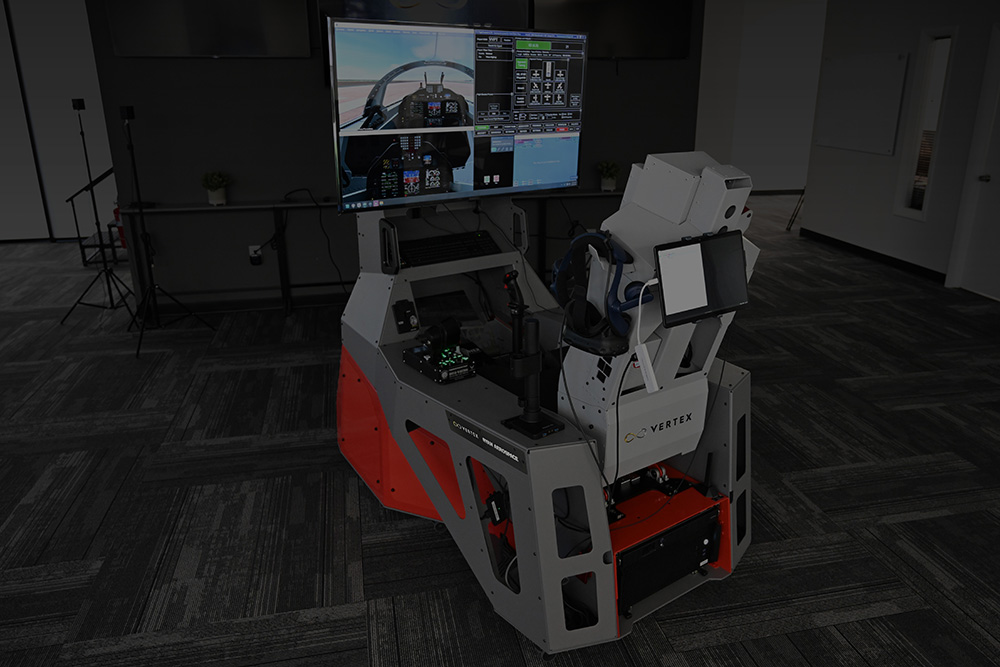
Vertex Solutions was awarded a U.S. Navy delivery order to provide a T-6C Virtual Reality Immersive Training Device (ITD) for the Vietnam People's Air Force, supporting U.S. Building Partner Capacity (BPC) objectives in the Indo-Pacific region. Awarded under the Navy's Extended Reality Simulator Training and Support Contract (XR STASC) IDIQ, the program includes the design, fabrication, installation, and initial instructor training for a high-fidelity T-6C Texan II flight simulator. Configured specifically for Vietnam's aircraft, the reconfigurable XR training system supports basic through advanced flight instruction, formation flying, and foundational tactical training within an immersive environment.
THE CHALLENGE
ADVANCING PILOT TRAINING. EXPANDING PARTNER CAPACITY.
Modernizing military pilot training requires accessible, realistic simulation technologies that support increasingly complex flight operations without placing additional demands on aircraft availability and training resources. As Vietnam expands its T-6C training capabilities, its air force needs a flexible solution that supports aircraft familiarization, instrument and visual flight, formation maneuvers, and introductory tactical instruction. The challenge is establishing a cost-effective training capability that accommodates aircraft-specific requirements while enabling repeatable individual and multi-aircraft training aligned with military aviation curricula.
VERTEX SOLUTION
AIRCRAFT-SPECIFIC TRAINING. PROVEN XR TECHNOLOGY.
Vertex is developing a reconfigurable T-6C Immersive Training Device modeled on the Vietnam-specific Beechcraft/Textron Model 3000 T-6C Texan II configuration. The simulator is designed to support basic and advanced procedures, instrument and visual flight, section and division formation flying, and introductory air-to-air and air-to-ground training. Its network-capable architecture enables shared virtual environments for single- and multi-aircraft mission execution. As prime systems integrator, Vertex is responsible for hardware and software integration, fabrication, installation, and initial instructor training, providing a complete immersive training solution tailored to the Vietnam People's Air Force.
RESULTS & IMPACT
EXPANDING GLOBAL TRAINING CAPABILITY.
The December 2025 contract award expanded Vertex's international military aviation training portfolio and established a new opportunity to support the Vietnam People's Air Force through the U.S. Navy's Building Partner Capacity program. The awarded T-6C training device is designed to provide a dedicated immersive training capability for procedural instruction, formation flying, and foundational tactical scenarios. By adapting proven XR flight simulation technology to Vietnam's aircraft configuration, the program supports greater training accessibility, repeatable practice, and long-term pilot development. The effort demonstrates Vertex's ability to deliver aircraft-specific, reconfigurable training solutions that strengthen partner nation aviation training capabilities across the Indo-Pacific region.
PERFORMANCE HIGHLIGHTS
Indo-Pacific
Partner Nation Support
T-6C
Virtual Reality Flight Simulator
Instructor
Training and Integration
Open
Architecture
T-6C Immersive Training Devices (ITDs) - Royal Thai Air Force
PROGRAM OVERVIEW
Vertex Solutions was awarded a U.S. Navy delivery order to provide a T-6C Virtual Reality Immersive Training Device (ITD) for the Royal Thai Air Force, supporting U.S. Building Partner Capacity (BPC) objectives in the Indo-Pacific region. Awarded under the Navy's Extended Reality Simulator Training and Support Contract (XR STASC) IDIQ, the program includes the design, fabrication, installation, and initial instructor training for a high-fidelity T-6C Texan II flight simulator. Configured specifically for Thailand's aircraft, the reconfigurable XR training system supports basic through advanced flight instruction, formation flying, and foundational tactical training within an immersive environment.
THE CHALLENGE
ADVANCING PILOT TRAINING. EXPANDING PARTNER CAPACITY.
Modernizing military pilot training requires accessible, realistic simulation technologies that support increasingly complex flight operations without placing additional demands on aircraft availability and training resources. As Thailand expands its T-6C training capabilities, its air force needs a flexible solution that supports aircraft familiarization, instrument and visual flight, formation maneuvers, and introductory tactical instruction. The challenge is establishing a cost-effective training capability that accommodates aircraft-specific requirements while enabling repeatable individual and multi-aircraft training aligned with military aviation curricula.
VERTEX SOLUTION
AIRCRAFT-SPECIFIC TRAINING. PROVEN XR TECHNOLOGY.
Vertex is developing a reconfigurable T-6C Immersive Training Device modeled on the Thailand-specific Beechcraft/Textron Model 3000 T-6C Texan II configuration. The simulator is designed to support basic and advanced procedures, instrument and visual flight, section and division formation flying, and introductory air-to-air and air-to-ground training. Its network-capable architecture enables shared virtual environments for single- and multi-aircraft mission execution. As prime systems integrator, Vertex is responsible for hardware and software integration, fabrication, installation, and initial instructor training, providing a complete immersive training solution tailored to the Royal Thai Air Force.
RESULTS & IMPACT
EXPANDING GLOBAL TRAINING CAPABILITY.
The December 2025 contract award expanded Vertex's international military aviation training portfolio and established a new opportunity to support the Royal Thai Air Force through the U.S. Navy's Building Partner Capacity program. The awarded T-6C training device is designed to provide a dedicated immersive training capability for procedural instruction, formation flying, and foundational tactical scenarios. By adapting proven XR flight simulation technology to Thailand's aircraft configuration, the program supports greater training accessibility, repeatable practice, and long-term pilot development. The effort demonstrates Vertex's ability to deliver aircraft-specific, reconfigurable training solutions that strengthen partner nation aviation training capabilities across the Indo-Pacific region.
PERFORMANCE HIGHLIGHTS
Indo-Pacific
Partner Nation Support
T-6C
Virtual Reality Flight Simulator
Instructor
Training and Integration
Open
Architecture
experience you can build on.
Every mission presents unique challenges. Vertex combines proven experience, technical expertise, and innovative training technologies to deliver solutions tailored to your needs.